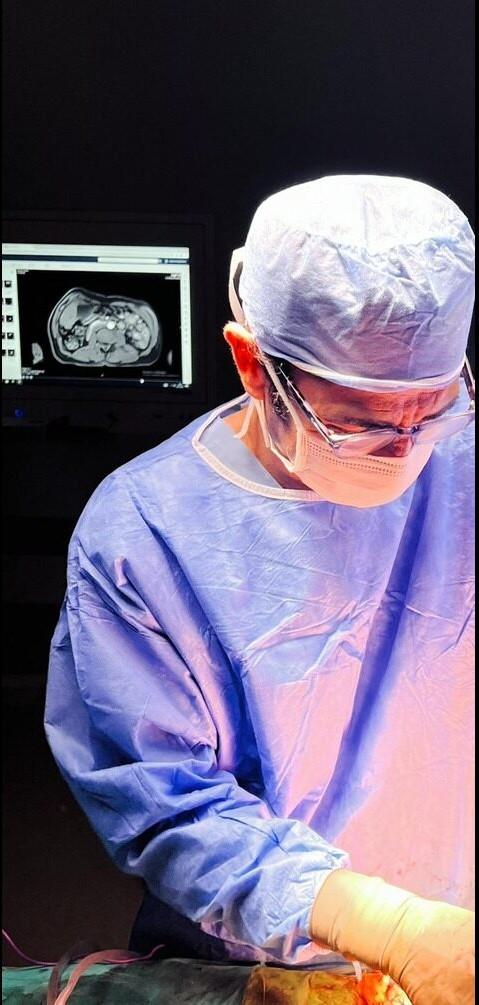
Assoc. Prof. Dr. Ümit Sekmen

Liver Tests and Imaging

Blood tests and imaging are used together to diagnose liver diseases. The right testing plan clarifies the diagnosis and allows surgical decisions to be made with confidence.

The liver, in three dimensions

Liver surgery requires precise planning around the organ's vessels and segments.

The liver with the gallbladder and inferior vena cava. Surgical planning depends on how these structures relate.

Drag to rotate

Lesions such as tumors, stones and cysts are shown schematically. 3D anatomy models: BodyParts3D, © The Database Center for Life Science, CC BY 4.0

Liver function tests

Blood tests show whether there is damage to liver cells and how well the organ is producing essential substances. The results need to be interpreted together rather than as a single value.

  • ALT and AST: indicators of liver cell damage
  • ALP and GGT: may point to bile duct problems
  • Bilirubin: used to investigate the cause of jaundice
  • Albumin and INR: show the liver's production capacity
  • Platelet count: may be low in cirrhosis

Tumor markers

AFP (alpha-fetoprotein) is used in the follow-up of hepatocellular carcinoma, while CEA and CA 19-9 can be helpful in metastatic disease and bile duct tumors.

Tumor markers cannot establish a diagnosis on their own; they are evaluated together with imaging and, when necessary, a biopsy.

Imaging methods

Ultrasound is usually the first step. When a suspicious lesion is found, contrast-enhanced computed tomography (CT) or magnetic resonance imaging (MRI) is used to examine its nature, size and relationship to blood vessels in detail.

When cancer is suspected, PET-CT can scan the rest of the body. In surgical planning, three-dimensional volume calculations show whether the remaining liver will be sufficient.

Biopsy and elastography

When imaging does not provide a clear answer, a tissue sample can be taken with a thin needle. Elastography (FibroScan), which measures liver stiffness, helps assess the degree of fibrosis and cirrhosis without a needle.

Frequently asked questions

Do high liver enzymes mean I have a serious disease?

Not always. Fatty liver, certain medications, alcohol or temporary infections can also raise enzyme levels. How high the value is and how it fits with other test results are what matter.

Which test is best for a liver mass?

For most liver masses, contrast-enhanced MRI performed with a liver-specific protocol gives the most detailed information. Your physician decides which test is needed based on your clinical situation.

Content prepared by Assoc. Prof. Dr. Ümit Sekmen.

The information on this page is for general educational purposes only. A medical examination by a physician is always required for diagnosis and treatment.

Related area of expertiseLiver Surgery

Plan the first step for surgical evaluation.

Let's discuss your surgical decisions with clear information and proper clinical assessment.