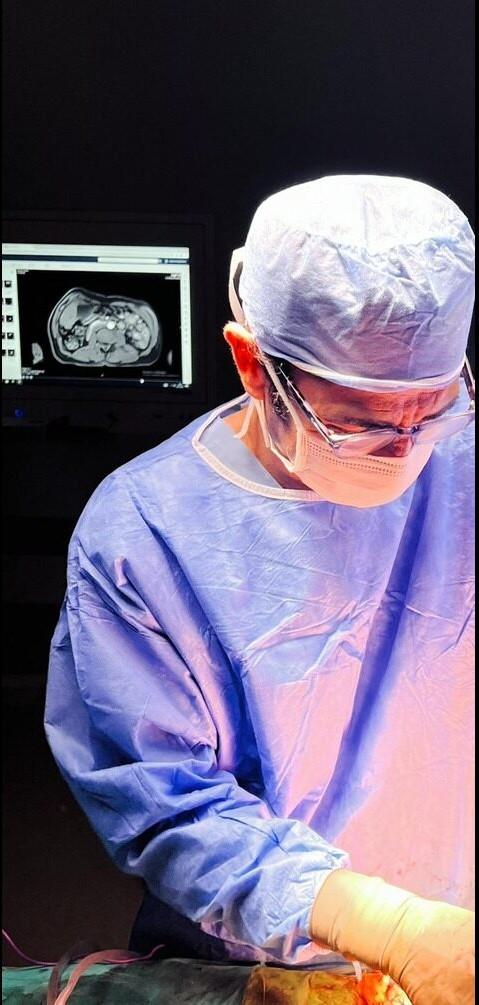
Assoc. Prof. Dr. Ümit Sekmen

Liver Cirrhosis

Cirrhosis occurs when long-standing liver damage causes healthy tissue to be replaced by hard scar tissue. It gradually reduces liver function and increases the risk of liver cancer.

The liver, in three dimensions

Liver surgery requires precise planning around the organ's vessels and segments.

The liver with the gallbladder and inferior vena cava. Surgical planning depends on how these structures relate.

Drag to rotate

Lesions such as tumors, stones and cysts are shown schematically. 3D anatomy models: BodyParts3D, © The Database Center for Life Science, CC BY 4.0

Causes of cirrhosis

Cirrhosis is the result of damage that builds up over years. The main causes are:

  • Chronic hepatitis B and hepatitis C
  • Long-term, heavy alcohol use
  • Metabolic (fatty) liver disease
  • Autoimmune hepatitis and bile duct diseases
  • Certain inherited metabolic diseases

Symptoms and complications

In the early stages cirrhosis may cause no symptoms. As it progresses, fatigue, jaundice, fluid build-up in the abdomen (ascites), swollen legs, easy bruising, bleeding from esophageal varices and changes in consciousness may occur.

Cirrhosis and liver cancer

The risk of developing hepatocellular carcinoma rises markedly in patients with cirrhosis. For this reason, every patient with cirrhosis is advised to have ultrasound and AFP follow-up every six months.

Surgery in patients with cirrhosis

Cirrhosis reduces the liver's capacity to tolerate surgery and to regenerate. Before any abdominal operation in these patients, liver function, the presence of portal hypertension and Child-Pugh / MELD scores are carefully evaluated.

In advanced cirrhosis, or in tumors that develop on a cirrhotic liver, liver transplantation may be the most appropriate treatment for selected patients.

Frequently asked questions

Can cirrhosis be reversed?

Established cirrhosis usually cannot be fully reversed; however, when the cause is removed (for example by treating hepatitis or stopping alcohol), progression can be halted and liver function may improve.

Can patients with cirrhosis have surgery?

In early-stage cirrhosis, many operations can be performed safely with appropriate preparation. In advanced stages the risk increases and the decision must be made after careful evaluation.

Content prepared by Assoc. Prof. Dr. Ümit Sekmen.

The information on this page is for general educational purposes only. A medical examination by a physician is always required for diagnosis and treatment.

Related area of expertiseLiver Surgery

Plan the first step for surgical evaluation.

Let's discuss your surgical decisions with clear information and proper clinical assessment.