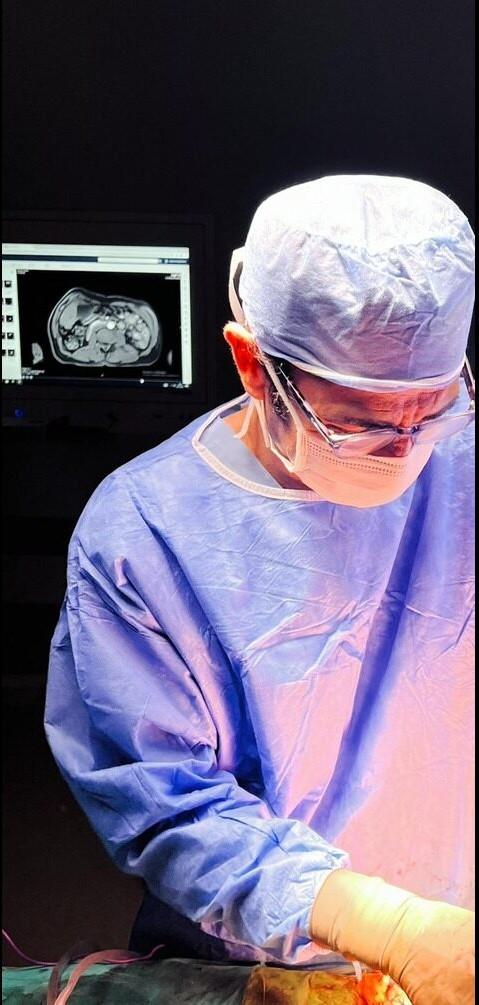
Assoc. Prof. Dr. Ümit Sekmen

About the Liver

The liver is the largest internal organ in the body and carries out hundreds of functions essential for life at the same time. Its ability to regenerate also gives it a special role in surgical treatment.

The liver, in three dimensions

Liver surgery requires precise planning around the organ's vessels and segments.

The liver with the gallbladder and inferior vena cava. Surgical planning depends on how these structures relate.

Drag to rotate

Lesions such as tumors, stones and cysts are shown schematically. 3D anatomy models: BodyParts3D, © The Database Center for Life Science, CC BY 4.0

Structure of the liver

The liver sits in the upper right part of the abdomen, just below the diaphragm, and weighs about 1.2–1.5 kg in adults. Surgically, it is divided into eight separate segments, each with its own blood supply and bile drainage.

This segmental structure makes it possible to remove only the diseased part during liver surgery while preserving healthy tissue.

Main functions of the liver

The liver is the center of metabolism and is connected to nearly every system in the body.

  • Producing bile and aiding the digestion of fats
  • Producing blood clotting factors
  • Processing medications, alcohol and toxins
  • Storing sugar, vitamins and minerals
  • Synthesizing important proteins such as albumin
  • Supporting the immune system

The liver's ability to regenerate

When a significant part of a healthy liver is surgically removed, the remaining tissue can grow over a few weeks and largely regain its function.

This property allows extensive resections to be performed safely for liver tumors. In chronic diseases such as cirrhosis, however, the capacity to regenerate is reduced, so the liver reserve must be measured carefully before surgery.

Symptoms of liver disease

Liver diseases may cause no symptoms for a long time. When symptoms do appear, they usually include the following:

  • Yellowing of the skin and eyes (jaundice)
  • Pain or a feeling of fullness in the upper right abdomen
  • Fatigue, loss of appetite and weight loss
  • Dark urine and pale stools
  • Abdominal swelling and swollen legs
  • Itching

Frequently asked questions

Can liver disease progress without symptoms?

Yes. Fatty liver, hepatitis and some tumors can remain silent for a long time. That is why regular blood tests and ultrasound are important for people with risk factors.

How much of the liver can be removed?

In a healthy liver, a large part of the organ can be removed in suitable patients. Whether the remaining tissue will be sufficient is assessed before surgery with imaging and volume calculations.

Content prepared by Assoc. Prof. Dr. Ümit Sekmen.

The information on this page is for general educational purposes only. A medical examination by a physician is always required for diagnosis and treatment.

Related area of expertiseLiver Surgery

Plan the first step for surgical evaluation.

Let's discuss your surgical decisions with clear information and proper clinical assessment.