Types of hernia
Hernias can develop in different areas of the abdominal wall:
- Inguinal (groin) hernia
- Femoral hernia
- Umbilical (belly button) hernia
- Incisional hernia
- Epigastric hernia
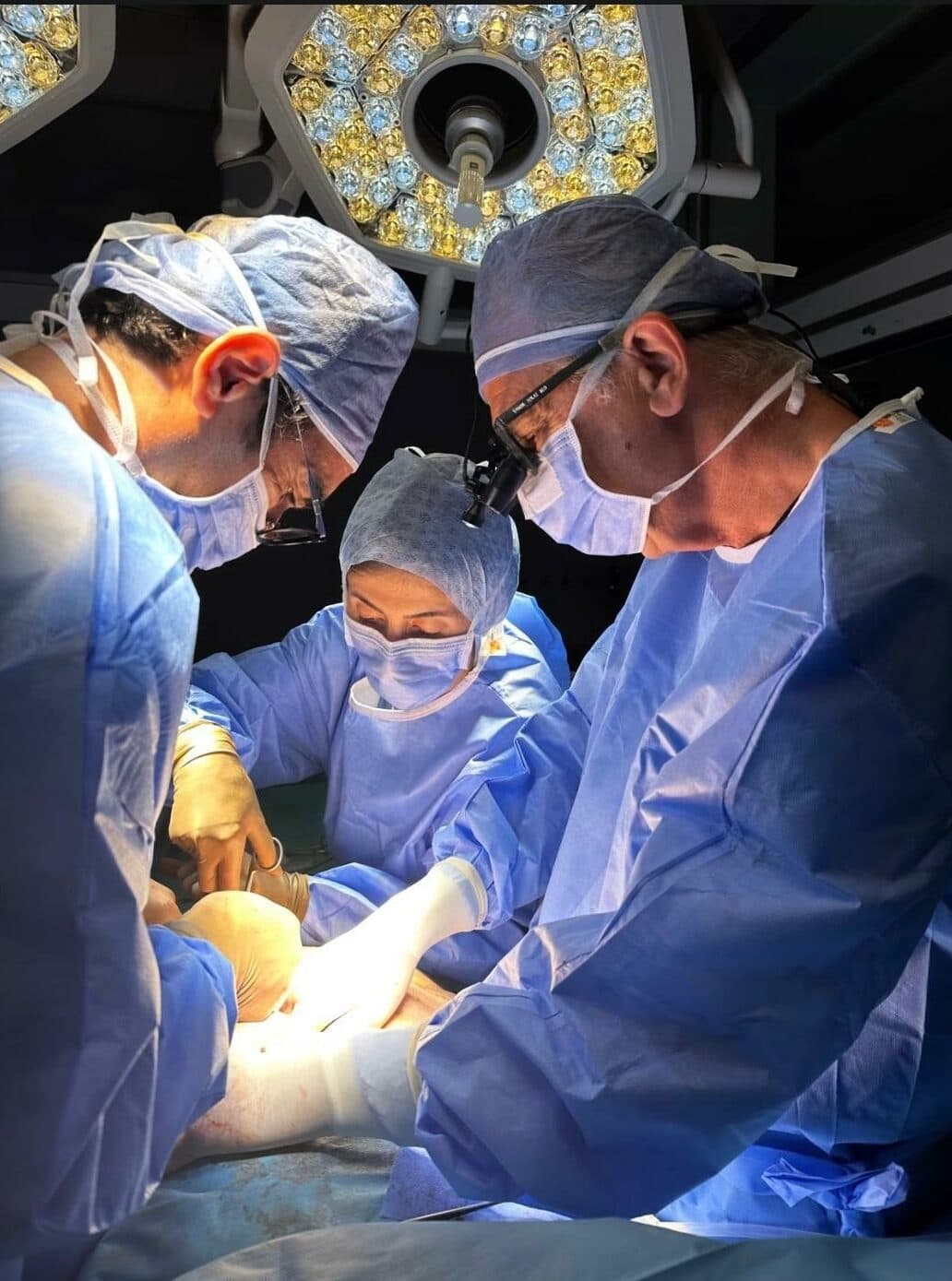
A hernia occurs when abdominal organs or fat push out through a weak spot in the abdominal wall. It does not heal on its own, and the lasting treatment is surgery.
Hernias can develop in different areas of the abdominal wall:
The most typical symptom is a bulge that becomes more noticeable when standing, coughing or straining and disappears when lying down. There may be a feeling of heaviness and pain in the area.
A bulge that cannot be pushed back in, becomes hard or red, or is accompanied by severe pain and vomiting may be a sign of a strangulated hernia and requires emergency surgery.
In hernia repair, the weak area is usually reinforced with a special mesh. Depending on the type of hernia and the patient's condition, an open or laparoscopic (minimally invasive) approach may be chosen.
Laparoscopic repair can offer less pain and faster recovery, particularly in bilateral and recurrent inguinal hernias.
Two main laparoscopic techniques are used for inguinal hernias. In the TEP (totally extraperitoneal) technique, the surgeon works in the space in front of the peritoneum without entering the abdominal cavity. In the TAPP (transabdominal preperitoneal) technique, the abdomen is entered and the mesh is placed in the same area.
With both techniques, the mesh covers the weak area where the hernia emerged broadly from the inside. The choice of technique depends on the type of hernia, any previous operations and the patient's general condition.
No. A truss or support garment may relieve symptoms temporarily, but it does not treat the hernia. The lasting solution is surgical repair.
Light walking can begin right away. It is generally recommended to wait 4–6 weeks before heavy lifting and strenuous exercise.
Content prepared by Assoc. Prof. Dr. Ümit Sekmen.
The information on this page is for general educational purposes only. A medical examination by a physician is always required for diagnosis and treatment.
Let's discuss your surgical decisions with clear information and proper clinical assessment.