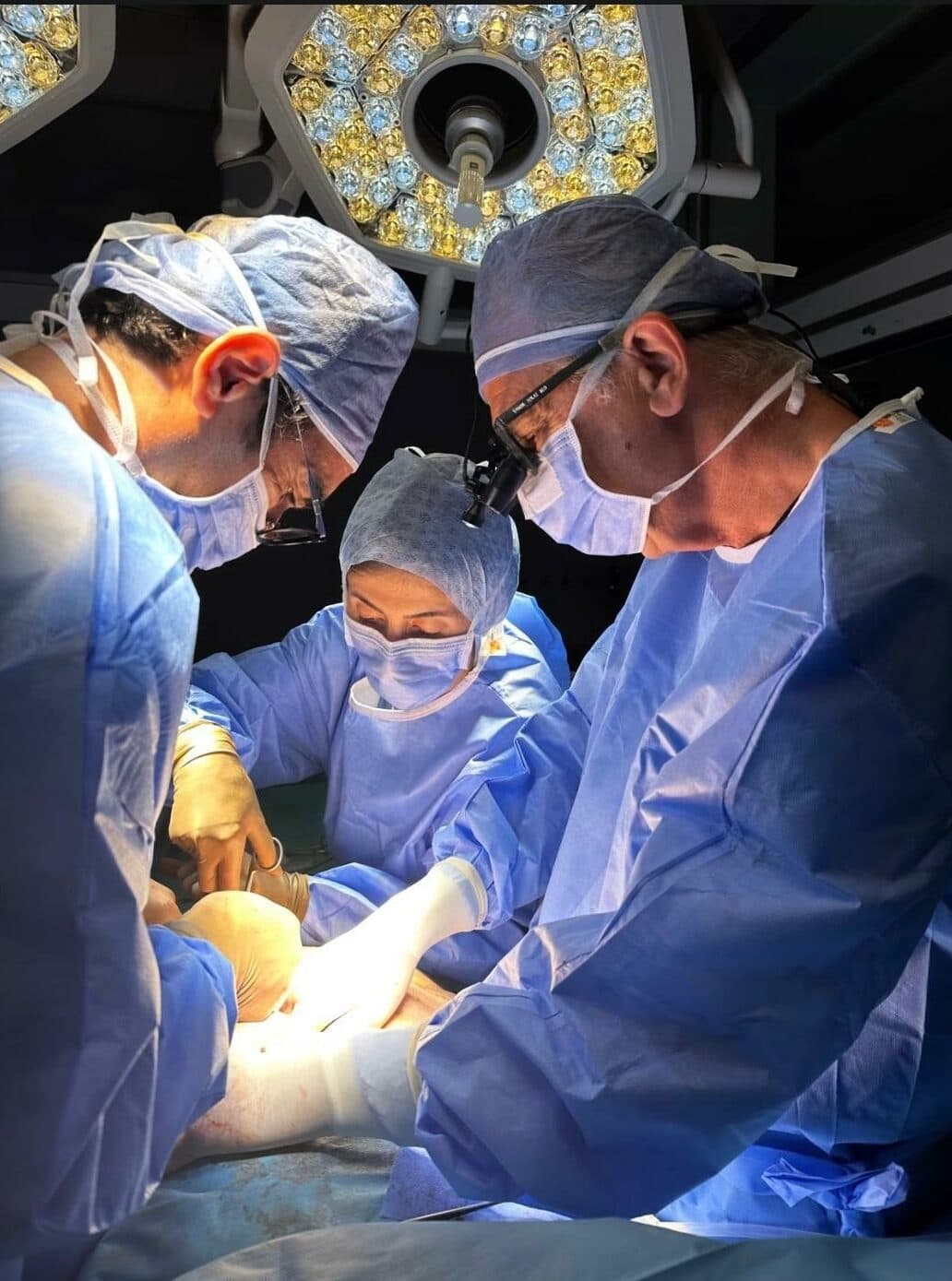
Assoc. Prof. Dr. Ümit Sekmen

Gallstones and Gallbladder Surgery

Gallstones are very common and cause no symptoms in most people. When stones cause pain or complications, the most effective treatment is removal of the gallbladder laparoscopically.

Gallbladder

Sitting beneath the liver, the gallbladder stores bile and releases it into the intestine after meals.

The gallbladder lies on the underside of the liver and drains through the bile ducts into the duodenum.

Drag to rotate

Lesions such as tumors, stones and cysts are shown schematically. 3D anatomy models: BodyParts3D, © The Database Center for Life Science, CC BY 4.0

Symptoms

The most typical symptom is pain felt in the upper right abdomen or the pit of the stomach, often starting after fatty meals and sometimes spreading to the back (biliary colic). Nausea, vomiting and indigestion may accompany it.

Fever, jaundice, or severe pain that does not go away can signal complications such as gallbladder inflammation, bile duct obstruction or pancreatitis, and require urgent evaluation.

When is surgery needed?

Stones that cause no symptoms are usually just monitored. Surgery is recommended mainly in these situations:

  • Recurrent attacks of biliary colic
  • Gallbladder inflammation (acute cholecystitis)
  • Pancreatitis or jaundice caused by stones
  • Gallbladder polyps (above a certain size)
  • Conditions that carry a cancer risk, such as porcelain gallbladder

Laparoscopic cholecystectomy

The operation is performed under general anesthesia through a few small incisions in the abdominal wall, using a camera and special instruments. Most patients go home the same day or the next day and return to daily life quickly.

Life without a gallbladder

Bile continues to be made in the liver and flows directly into the intestine. Most patients return to their normal diet after surgery; avoiding very fatty meals during the first weeks makes digestion easier.

Frequently asked questions

Can gallstones be dissolved with medication?

Some small cholesterol stones can shrink with long-term medication, but success is limited and stones often return once the medication is stopped. For stones that cause symptoms, the lasting solution is surgery.

When can I return to work after laparoscopic gallbladder surgery?

Usually within a week for desk jobs and after a few weeks for physically demanding work.

Content prepared by Assoc. Prof. Dr. Ümit Sekmen.

The information on this page is for general educational purposes only. A medical examination by a physician is always required for diagnosis and treatment.

Related area of expertiseSurgical Procedures

Plan the first step for surgical evaluation.

Let's discuss your surgical decisions with clear information and proper clinical assessment.